Old English Æppel, More Than ‘Apple’
Students of Old English are apt to equate OE æppel with ModE apple, but these two words are, to a certain extent, false friends. The semantic field of the OE word is broader than its modern counterpart. Apart from ‘apple,’ æppel can also mean broadly ‘fruit,’ and in this case, a modifier may be added to disambiguate: e.g., ‘pomegranate’ = (affricanisc / gecyrnled / read) æppel; ‘date’ = (milisc) æppel; æppelwin = ‘fruit-wine,’ glossing even hydromellum, the meaning of which in Medieval Latin was not restricted to ‘mead’ (see the excerpts from the DOE and Logeion).
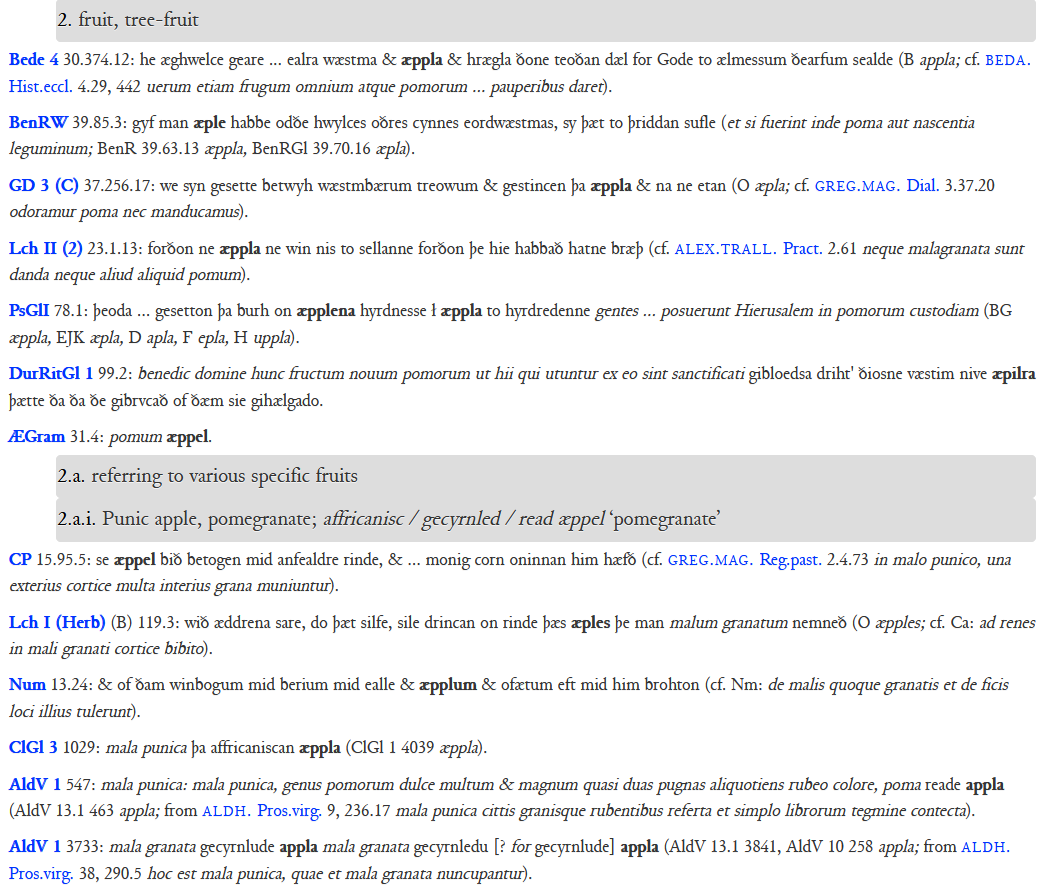
Excerpt from the entry ‘æppel’ in the Dictionary of Old English.

Excerpt from the online dictionary Logeion.
This broad usage extended well beyond the OE period, and the OED gives as one definition “any fruit, or similar vegetable production; especially such as in some respect resemble the apple, but, from the earliest period, used with the greatest latitude,” and cites, for example, “the fruit or Apples of Palm-trees” from 1673 (see the quotation below from the OED). By extension, æppel can also refer to a spherical or circular object, thus a ‘ball, pellet, pupil, eyeball,’ the latter æppel (þæs eagan).
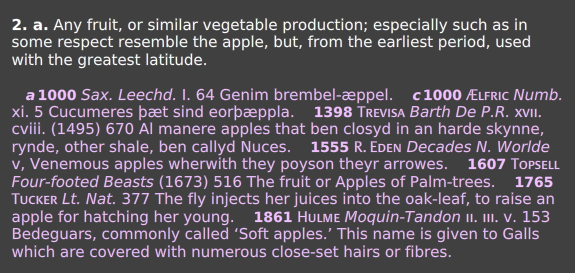
Excerpt from the entry on ‘apple’ in the Oxford English Dictionary.
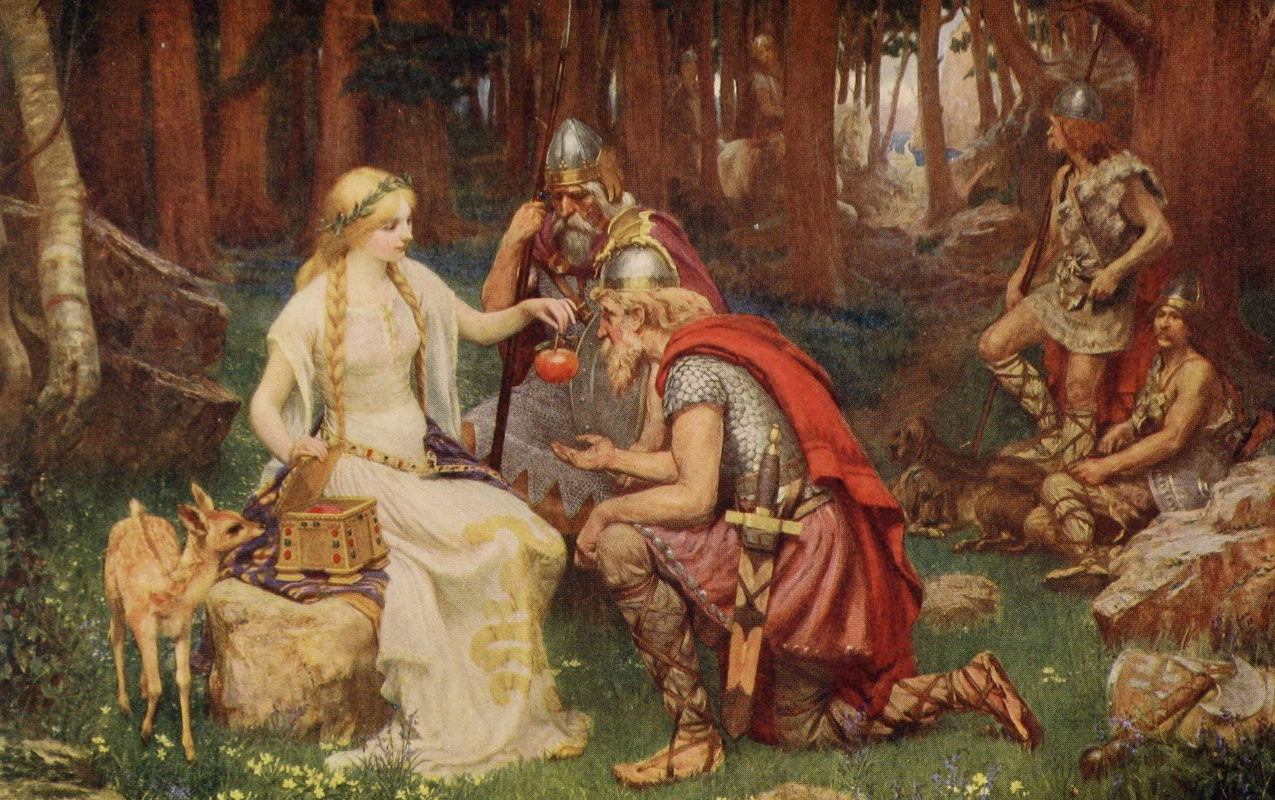
The mythic apple.
 Old English and Gothic Blog